
Introduction
Printing is what turns a plain bottle, jar, or box into a branded product. For cosmetic brands, the choice of printing technique affects appearance, durability, cost, and production time. Whether you are launching a new skincare line or refreshing an existing product, understanding cosmetic packaging printing is essential.
This guide covers the most common printing and decoration techniques used in cosmetic packaging. It explains how each method works, what it is best for, and how to avoid common problems.
Why Printing Matters in Cosmetic Packaging
Packaging printing serves several purposes:
- Displays your logo and brand name
- Communicates product information and claims
- Attracts attention on the shelf
- Creates a premium or playful look
- Meets labeling regulations in different markets
A poor printing job can make even a high-quality product look cheap. A great printing job can elevate your brand and justify a higher price.
1. Silk Screen Printing
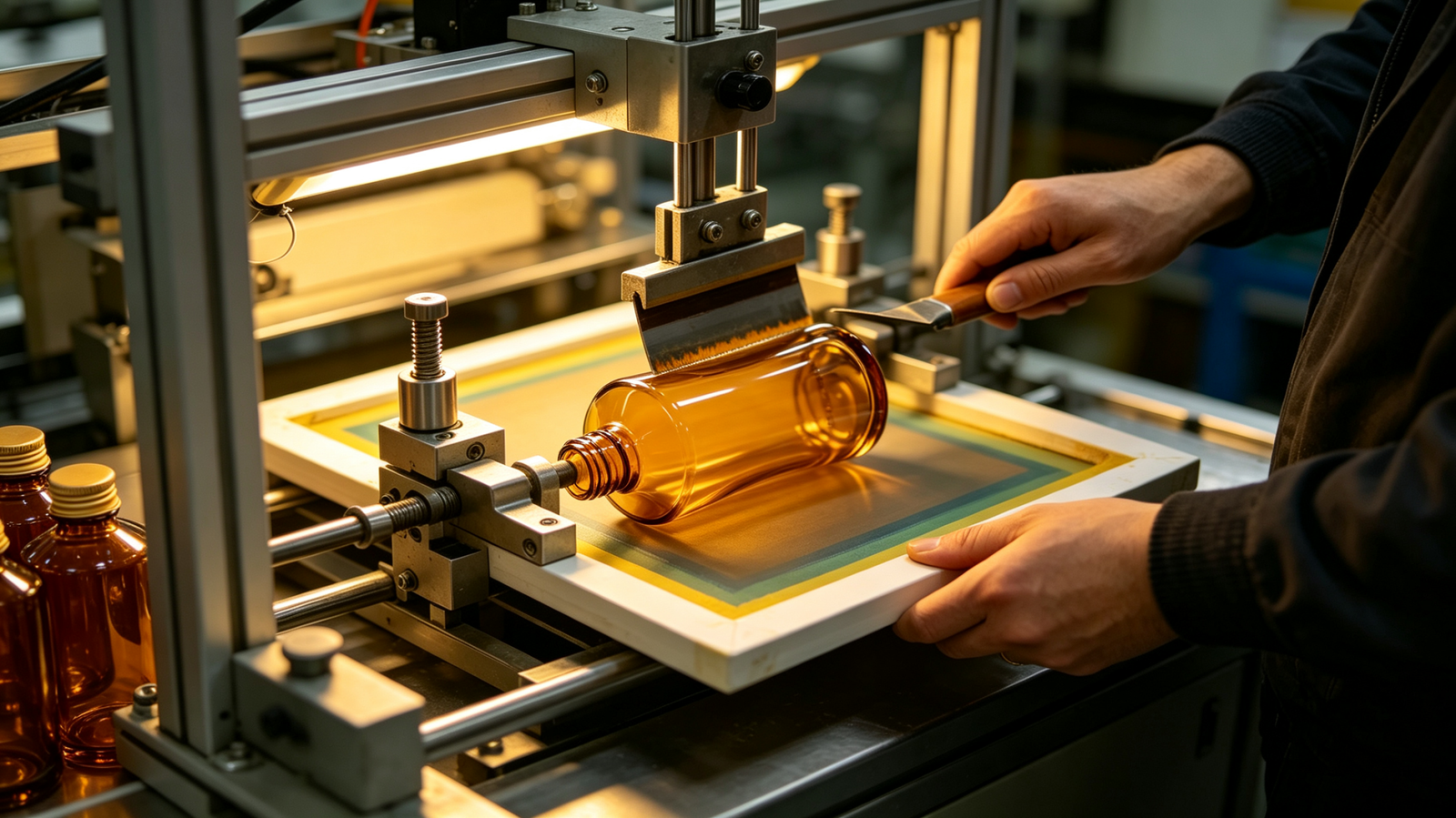
Silk screen printing, also called screen printing, is one of the most common methods for cosmetic packaging.
How it works:
A mesh screen is created with your design. Ink is pushed through the screen onto the bottle or jar surface. Each color requires a separate screen.
Best for:
- Glass and plastic bottles
- Simple logos and text
- One to three colors
- Small to medium production runs
Pros:
- Durable and long-lasting
- Good color opacity
- Works on curved surfaces
Cons:
- Limited color range per design
- Not ideal for complex gradients or photos
2. Hot Stamping
Hot stamping uses heat and pressure to transfer a metallic foil onto the packaging surface.
How it works:
A heated die presses the foil against the bottle or box. The foil transfers only where the die touches.
Best for:
- Luxury cosmetics
- Logos and brand names
- Glass, plastic, and paper boxes
- Gold, silver, rose gold, or colored foil effects
Pros:
- Premium, shiny finish
- Sharp details
- No ink required
Cons:
- Higher cost per unit
- Not suitable for large solid areas
- Requires a metal die, which adds setup cost
3. UV Printing
UV printing uses ultraviolet light to cure ink instantly. It is a digital printing method.
How it works:
The printer jets ink onto the surface, and UV light cures it immediately. No drying time is needed.
Best for:
- Full-color designs
- Short runs and limited editions
- Plastic bottles, tubes, and boxes
- Personalized or variable data
Pros:
- High resolution and detail
- Fast production
- No plate or screen setup cost
Cons:
- Ink may not adhere well to some glass surfaces
- Less durable than silk screen or hot stamping on certain materials
4. Thermal Transfer Printing
Thermal transfer printing uses a heated ribbon to transfer ink onto the packaging.
How it works:
A print head heats the ribbon, which transfers ink to the surface. It is commonly used for labels and flexible packaging.
Best for:
- Tubes and flexible packaging
- Barcodes, batch numbers, and expiry dates
- Small text and fine details
Pros:
- Sharp, clear text
- Good for variable data
- Fast and cost-effective for labels
Cons:
- Limited color range
- Not ideal for large graphics
5. Labeling and Shrink Sleeves
Sometimes printing directly on the bottle is not the best option. Labels and shrink sleeves offer flexibility.
Labels:
- Pressure-sensitive labels
- Can be applied to most surfaces
- Easy to update or change
- Good for regulatory information
Shrink sleeves:
- 360-degree coverage
- Full-color graphics
- Tamper-evident
- Good for complex shapes
Best for:
- Brands that need frequent design changes
- Products with extensive labeling requirements
- Short production runs
6. Spray Coating and Electroplating
These are surface treatments rather than printing, but they are often used together with printing.
Spray coating:
- Applies a colored or protective layer
- Can be matte, glossy, frosted, or soft-touch
- Provides a premium feel
Electroplating:
- Creates a metallic, mirror-like finish
- Common on plastic caps and bottles
- Available in gold, silver, rose gold, and other colors
Best for:
- High-end cosmetic packaging
- Creating a luxury look
- Protecting the surface from scratches
How to Choose the Right Printing Technique
Consider these factors when selecting a printing method:
- Design complexity: Simple logos work well with silk screen. Full-color designs need UV printing or labels.
- Material: Glass, plastic, acrylic, and paper all behave differently with each method.
- Durability: Hot stamping and silk screen are more durable than UV printing on some surfaces.
- Cost: Setup costs, unit costs, and MOQ vary widely.
- Production volume: Digital methods are better for small runs. Traditional methods are more cost-effective for large runs.
- Lead time: Some methods require more preparation time than others.
Ask your supplier for samples of each technique so you can compare quality and feel.
Common Printing Problems and How to Avoid Them
- Color mismatch: Always approve a Pantone color reference under natural light.
- Poor adhesion: Test the print with a tape test or scratch test.
- Misalignment: Check the artwork position on the bottle before bulk production.
- Fading: Choose UV-resistant inks for products exposed to sunlight.
- Scratches: Add a protective coating if needed.
A good supplier will catch these issues before mass production. Always request a pre-production sample.
How Bingoo International Supports Printing and Decoration
Bingoo International is a professional packaging supplier based in China. We offer a full range of printing and decoration services for cosmetic packaging, including silk screen, hot stamping, UV printing, labeling, and spray coating. We help brands choose the right technique for their design, material, and budget.
Whether you need custom bottles, jars, tubes, or boxes, we can support you from artwork to finished product.
Conclusion
Cosmetic packaging printing is both an art and a science. The right technique can make your product stand out, while the wrong one can waste money and damage your brand. Understand your options, test samples, and work with a supplier who knows the trade. If you need help with printing for your cosmetic packaging, contact us today.
FAQ
Q: What is the most durable printing method for cosmetic bottles?
A: Hot stamping and silk screen printing are generally the most durable on glass and plastic surfaces.
Q: Can I print full-color designs on glass bottles?
A: Yes, UV printing or shrink sleeves can achieve full-color designs. However, durability may vary depending on the material and coating.
Q: What is the MOQ for custom printing?
A: It depends on the method. Digital printing like UV has lower MOQ. Silk screen and hot stamping usually require higher MOQ because of setup costs.