
Introduction
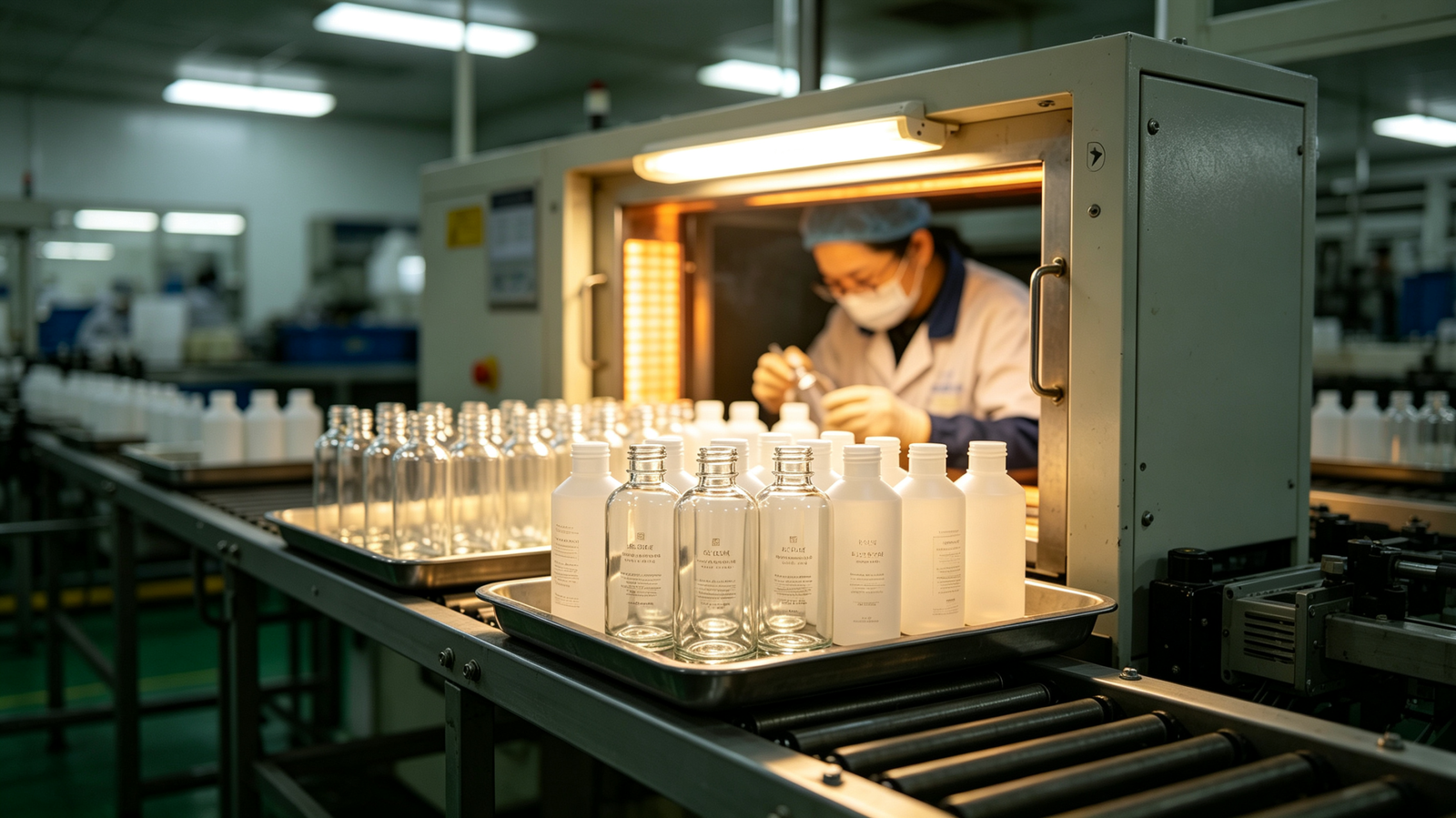
Leakage is one of the most serious quality failures in cosmetic packaging. A leaking bottle can ruin a product, damage a shipment, and destroy customer trust. For B2B buyers, understanding how to test seal integrity and prevent leaks is essential. This guide shares practical knowledge on leak testing methods, common failure points, and how to work with your supplier to ensure reliable packaging.
Why Seal Integrity Matters
Cosmetic products are often liquid, semi-liquid, or oil-based. They can leak through the smallest gap in a cap, pump, or dropper. Leakage causes:
- Product loss and mess
- Contamination and oxidation
- Customer complaints and returns
- Damage to other products in the same carton
- Brand reputation damage
Seal integrity is not just about the bottle. It includes the cap, liner, pump, dropper, and any other closure component. Every part of the sealing system must work together.
Common Leak Failure Points
1. Cap and Neck Mismatch
If the cap thread does not match the bottle neck, the cap will not seal properly. This can happen when components come from different suppliers.
2. Missing or Damaged Liner
Many caps use a liner (foam, paper, or plastic) to create a tight seal. A missing, loose, or damaged liner will cause leaks.
3. Poor Pump or Dropper Assembly
Pumps and droppers have multiple parts: gaskets, springs, and tubes. If any part is assembled incorrectly or is out of tolerance, leakage can occur.
4. Deformation of the Bottle Neck
If the bottle neck is not perfectly round or has a sharp edge, the cap will not seal evenly.
5. Over-tightening or Under-tightening
Over-tightening can crack the cap or distort the liner. Under-tightening leaves a gap. Both cause leaks.
6. Material Incompatibility
Some formulas can swell or shrink rubber gaskets and plastic liners. This breaks the seal over time.
H2: Leak Testing Methods
There are several ways to test seal integrity. The right method depends on your product, packaging type, and production stage.
1. Manual Leak Test
The simplest method. Fill the bottle with water or your actual formula. Tighten the cap. Turn the bottle upside down and shake it. Observe for leaks around the cap, pump, or dropper.
This test is good for quick checks during sampling and pre-production.
2. Vacuum Decay Test
The bottle is placed in a vacuum chamber. If there is a leak, air will escape or enter, and the pressure change is detected. This method is highly sensitive and can detect very small leaks.
3. Pressure Hold Test
The bottle is pressurized with air. The pressure is monitored over time. If pressure drops, there is a leak.
This test is common for pump bottles and aerosol-type packaging.
4. Dye Penetration Test
A colored dye solution is applied to the seal area. If the dye penetrates into the bottle, there is a leak. This method is useful for visual inspection of sealing surfaces.
5. Weight Loss Test
The filled bottle is weighed and stored for a period. If the weight decreases, product is escaping through the seal.
This test takes longer but reflects real storage conditions.
6. Temperature Cycling Test
Samples are cycled between low and high temperatures. This simulates shipping and storage conditions. After cycling, the bottles are checked for leaks.
How to Design Packaging for Better Sealing
Good sealing starts with good design. Consider these points:
- Standardize neck finishes: Use standard neck sizes to ensure compatible caps and pumps.
- Choose the right liner: Match the liner material to your formula and closure type.
- Specify tight tolerances: Work with your supplier to define acceptable ranges for neck diameter, thread pitch, and cap dimensions.
- Test early: Do not wait until mass production to test seal integrity.
- Consider secondary seals: Induction seals, shrink bands, or tamper-evident seals can provide extra protection.
Working with Your Supplier on Leak Testing
Your packaging supplier should be a partner in preventing leaks. Ask them:
- Can you provide samples for leak testing?
- Do you perform in-house leak testing?
- What are your tolerances for neck and cap dimensions?
- Can you recommend a compatible cap and liner for my formula?
- Do you offer pre-shipment leak testing?
A good supplier will understand the risks and help you choose the right components. They will also tell you if a design is likely to leak.
Common Mistakes in Leak Testing
- Testing only with water: Water is thinner than many cosmetic formulas. Always test with the actual formula or a realistic simulant.
- Skipping temperature cycling: Many leaks appear only after temperature changes.
- Testing only one sample: Leaks can be random. Test multiple samples from different production batches.
- Ignoring the closure: Caps, pumps, and droppers are common leak points. Test the complete package.
- Testing too late: Leak testing should happen before mold development and bulk production.
How Bingoo International Supports Leak-Free Packaging
Bingoo International is a professional packaging supplier based in China. We work with cosmetic brands to select bottles, jars, pumps, droppers, and caps that seal reliably. We can provide samples for leak testing, share material and dimension specifications, and coordinate with factories on pre-production testing.
We supply a wide range of packaging solutions, including glass bottles, plastic bottles, acrylic jars, airless pumps, and complete cosmetic packaging. Our goal is to help you avoid leakage problems and deliver quality products to your customers.
Conclusion
Leak testing and seal integrity are critical for cosmetic packaging. Understand the failure points, use the right test methods, and work with a supplier who takes quality seriously. If you need help preventing leaks in your packaging, contact us today.
FAQ
Q: What is the most common cause of leaks in cosmetic packaging?
A: Cap and neck mismatch, missing or damaged liners, and poor pump assembly are the most common causes.
Q: How do I test my packaging for leaks?
A: Start with a manual leak test using your actual formula. For more reliable results, use vacuum decay, pressure hold, or dye penetration testing.
Q: Can leaks be prevented by design?
A: Yes. Standard neck finishes, correct liner selection, tight tolerances, and early testing can prevent most leaks.
Q: Does Bingoo International provide leak testing?
A: We provide samples and coordinate with factories on pre-production testing. Contact us for details.